Monday, 6 February 2017

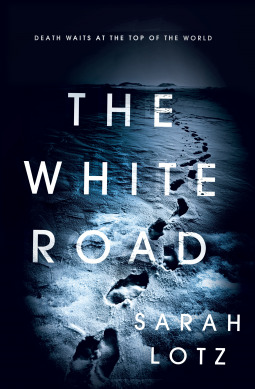
Book Review: THE WHITE ROAD by Sarah Lotz


The White Road by Sarah Lotz


Author: Sarah Lotz
Publisher:
Hachette Australia
Read:
February 2017
Expected publication: 17 May 2017


Synopsis (Goodreads):

Death waits at the top of the world in this adrenaline-laced thriller from Sarah Lotz, perfect for anyone who loves the film The Descent or John Krakauer's book Into Thin Air.

Adrenaline-junky Simon Newman sneaks onto private land to explore a dangerous cave in Wales with a strange man he's met online. But Simon gets more than he bargained for when the expedition goes horribly wrong. Simon emerges, the only survivor, after a rainstorm trap the two in the cave. Simon thinks he's had a lucky escape.

But his video of his near-death experience has just gone viral.

Suddenly Simon finds himself more famous than he could ever have imagined. Now he's faced with an impossible task: he's got to defy death once again, and film the entire thing. The whole world will be watching. There's only on place on earth for him to pit himself against the elements: Mt Everest, the tallest mountain in the world.

But Everest is also one of the deadliest spots on the planet. Two hundred and eighty people have died trying to reach its peak.

And Simon's luck is about to run out.


My thoughts:

Who is the third who walks always beside you?
When I count, there are only you and I together
But when I look ahead up the white road
There is always another one walking beside you
Gliding wrapt in a brown mantle, hooded
I do not know whether a man or a woman
— But who is that on the other side of you?

T. S. Eliot, The Waste Land and other poems

The third man factor, first described by Sir Ernest Shackleton on his gruelling trek across the frozen white road of South Carolina Island, refers to the presence of a spirit-being providing comfort in situations of extreme danger and distress, when people have reached the absolute limits of their endurance. What, however, if this being was not benevolent, but outright evil? What, if instead of lending strength and help in guiding its chosen human companion to safety, this spirit-being was out to lure him to his death?

Simon Newman has such an experience after hiring a stranger to guide him on an ill-fated caving expedition into the maze of Cwm Pot in Wales to capture footage for a website he and his friend Thierry are trying to get off the ground. Trapped by rising floodwaters in an underground cavern with the corpses of three other cavers who perished 20 years ago in similar circumstances, Simon's crazed companion Ed also succumbs to the cold and dies, leaving Simon to fend for himself. Despite making a miraculous escape out of this underground death trap, Simon feels Ed's presence in his nightmares and in stressful situations for years to come. When embarking on another extreme adventure to get footage for his website, the ascent of Mount Everest, Simon is surprised to read about the third man phenomenon in the journal of a climber who died a few years ago on the icy mountain. Maybe he is not crazy after all? Juliet Michaels clearly describes the presence of an evil spectre following her on her gruelling ascent and even visiting her in her tent one night. Exposed to extreme conditions on the mountain, the spectre of Ed is also back, creating a menacing presence Simon finds impossible to shake off. What will it take to lay Ed's spirit to rest and finally get his life back in order?

I loved the premise of the book, and Lotz instantly drew me in with this simple line: 
“I met the man who would save my life twice –and ultimately destroy it–on a potholed road in the arse-end of the Welsh countryside.”

The theme of the book, the third man phenomenon, has its roots in many real-life accounts of people who have survived impossible tests of human endurance, and caters to our fascination with the otherworldly. What could be more terrifying than an evil spectre haunting you when you're already down? Is it a mere figment of the hypoxic brain or a harbinger of death and doom? Both Simon's and Juliet's caving and mountaineering expeditions make for a fascinating read, and reminded me of two books I read and loved last year: ThinAir by Michelle Paver and The Dead House by Harry Bingham. Lotz clearly knows how create atmosphere and I was duly chilled by her claustrophobic descriptions of the dark and dank caves of Cwm Pot and the harsh icy landscape of Mount Everest. Whilst Simon’s caving expedition is downright scary, Juliet’s journal had me equally spellbound with the description of the white and hostile mountain, when she first suspects that an evil presence is following her on her climb. Creepy! For extra excitement, read this book at night with the wind howling outside! I was a bit disappointed that Simon's experience with the third man phenomenon on the mountain ended so abruptly, as it had so much more potential to chill and thrill. I was just settling into my goosebumps and burrowing into the safety of my doona, when the best bit was already over. The second part of the book lost a bit of momentum for me after that, although I thought the ending fitting, coming full circle in what was a tricky subject matter.

With its creepy and claustrophobic scenes based on true accounts of people who have survived impossibly harsh ordeals, The White Road should appeal to readers looking for an action-packed read with a touch of the mysterious and supernatural, without having to suspend disbelief. All characters are deeply flawed, which for me added authenticity, considering the motives driving the main protagonists to undertake such extreme adventures. Lotz has clearly done her research and gives a credible if chilling account of her characters’ exploits and encounters with either the spirit world or the dark side f their own psyche – judge for yourself. It certainly raised my goosebumps without pushing it too far across the line into the realm of unbelievable. A taut and tense read, consider taking it on your next camping trip for that bit of extra chill! It will haunt your deepest and darkest nightmares as you listen out for that tap-tapping of bony fingers on your tent’s canvas ....

Thank you to Netgalley and the publisher for providing me with a free electronic copy of this novel in exchange for an honest review. 


You may also enjoy:

The Dead House (Fiona Griffiths, #5) The Dead House, by Harry Bingham, which contains a terrifying and claustrophobic caving scene set in a network of Welsh caves. 

Thin Air Thin Air, by Michelle Paver, which contains another account of the "third man factor" experience during a mountaineering expedition.


Sunday, 5 February 2017

Book Review: THE GIRL BEFORE by J P Delaney


The Girl Before


Author: J P Delaney
Publisher:
Hachette Australia
Read:
February 2017


Synopsis (Goodreads):


"Please make a list of every possession you consider essential to your life."

The request seems odd, even intrusive—and for the two women who answer, the consequences are devastating.

Emma
Reeling from a traumatic break-in, Emma wants a new place to live. But none of the apartments she sees are affordable or feel safe. Until One Folgate Street. The house is an architectural masterpiece: a minimalist design of pale stone, plate glass, and soaring ceilings. But there are rules. The enigmatic architect who designed the house retains full control: no books, no throw pillows, no photos or clutter or personal effects of any kind. The space is intended to transform its occupant—and it does.

Jane
After a personal tragedy, Jane needs a fresh start. When she finds One Folgate Street she is instantly drawn to the space—and to its aloof but seductive creator. Moving in, Jane soon learns about the untimely death of the home’s previous tenant, a woman similar to Jane in age and appearance. As Jane tries to untangle truth from lies, she unwittingly follows the same patterns, makes the same choices, crosses paths with the same people, and experiences the same terror, as the girl before. 


My thoughts:


Clean, attractive and affordable apartments in London are as difficult to find as hens' teeth. One Folgate Street is an exception - designed by Edward Monkford, an architect famous for minimalistic designs, it is brand new, modern and as secure as a fortress. However, it comes with a catch: a long list of strict rules and regulations prospective tenants have to agree to that would put most people off. No children, no pets, no books, no clutter, no rugs on the floor or personal furniture, just to name a few, with inspections carried out at the owner's whim to ensure compliance. Even the lighting, shower and internet services are controlled by an intricate electronic system rather than the tenant. Who could possibly ever agree to such ridiculous demands?
No one who lives in this house should expect privacy. You signed that away, remember?

For Emma ("then"), it seems a small price to pay for state of the art security that would help her feel safe again after a terrifying home invasion she endured in her old apartment. And for Jane ("now"), it would mean a clear break from her old life after the stillbirth of her baby daughter. Two women, two years apart, using One Folgate Street as a fresh start. Initially things are going well, until Jane realises that her predecessor has died in this very apartment. And that Emma's life had some creepy similarities to her own. Suddenly One Folgate Street no longer seems like a safe haven. The very features of the house that once seemed to make life easier, now seem limiting and controlling. In fact, at times the house feels downright threatening, withholding essentials like running water or power if Jane does not comply. As if it had a mind of its own. As if it knew exactly what Jane is up to. 

It’s like the house didn’t want Simon to come round for our talk and this is its way of punishing me. It’s a fortress, I’d said to Simon. But what if the house itself decides not to protect me? How safe am I really?

Someone is watching, and waiting, and Jane is becoming more and more worried that Emma's death was not an accident. 

Someone has died in suspicious circumstances every time a Monkford Partnership building nears completion.

Can Jane work out what happened to Emma before the same fate lies in store for her?

The Girl Before contains (amongst other things) a fascinating premise: do we ever really know who has lived in our rental before us, what these walls have seen? Do we really want to know? With its slightly creepy setting of a house that seems like a living, breathing, menacing entity, the novel sets the scene for a taut, claustrophobic and original psychological thriller narrated by the voices of two different vulnerable women, who may or may not be reliable narrators. With several clever twists both in the "then" and the "now", there are a few slack-jawed moments until the reader realises that in this novel, you cannot trust anyone. In fact, as layer after layer is stripped away, and characters are laid bare in front of us, warts and all, we may question every assumption we have made. Even the house, which is as much of a living entity as the characters that inhabit it, is deceptive - safe haven or death trap? You will have to read on to find out. And as the author plays us just as the house plays its tenants, we know that nothing in this book will be straight forward.

I really enjoyed the different tactics the author employed to create tension - the tight and claustrophobic encounters with the house's electronic system, the little excerpts from the rental agreement at the end of chapters, the "then" and "now" approach. And whilst I did find the ending a little bit of an anti-climax, there is that little extra surprise at the end that seems to be the hallmark of Domestic Noir. All in all, a very clever psychological thriller, which will keep you guessing until the end. 


Thank you to Netgalley and the publisher for providing me with a free electronic copy of this novel in exchange for an honest review. 


Tuesday, 24 January 2017

Book Review: THE LAST PAINTING OF SARA DE VOS by Dominic Smith


The Last Painting of Sara de Vos by Dominic Smith


Title: The Last Painting of Sara de Vos
Author: Dominic Smith
Read: January 2017


Synopsis (Goodreads):


This is what we long for: the profound pleasure of being swept into vivid new worlds, worlds peopled by characters so intriguing and real that we can't shake them, even long after the reading's done. In his earlier, award-winning novels, Dominic Smith demonstrated a gift for coaxing the past to life. Now, in The Last Painting of Sara de Vos, he deftly bridges the historical and the contemporary, tracking a collision course between a rare landscape by a female Dutch painter of the golden age, an inheritor of the work in 1950s Manhattan, and a celebrated art historian who painted a forgery of it in her youth.

In 1631, Sara de Vos is admitted as a master painter to the Guild of St. Luke's in Holland, the first woman to be so recognized. Three hundred years later, only one work attributed to de Vos is known to remain--a haunting winter scene, At the Edge of a Wood, which hangs over the bed of a wealthy descendant of the original owner. An Australian grad student, Ellie Shipley, struggling to stay afloat in New York, agrees to paint a forgery of the landscape, a decision that will haunt her. Because now, half a century later, she's curating an exhibit of female Dutch painters, and both versions threaten to arrive. As the three threads intersect, The Last Painting of Sara de Vos mesmerizes while it grapples with the demands of the artistic life, showing how the deceits of the past can forge the present.

My thoughts:


It's always interesting to pick up a book that has received such mixed reviews. The Last Painting of Sara de Vos was recommended to me by a friend, who gave it a solid 5 stars and rated it the best book she had read in 2016. I was instantly intrigued. The subject matter is certainly interesting: art forgery, a love story and a back-story with historical content - I thought I would be in for a great reading journey! Maybe my expectations were too high, because for me, The Last Painting was a mixed bag. There were elements I really enjoyed, like Dominic Smith's prose, which is beautiful and flows in gentle undulations, conjuring vivid images of the landscape, people and time. What a difficult task, to capture the essence of paintings with mere words and convey their emotional content to the reader in descriptions of colours and texture only the mind can see! It is a credit to the author that I could visualise Sara's paintings vividly in my mind. I loved the chapters dealing with Sara's life, which explored a chapter in history that I knew very little about. Her character was well drawn, and I was finding myself constantly waiting for Sara's voice to return and to learn more about her. There were so many unanswered questions I was hoping would be explained at some stage, but this didn't happen.

It took me a lot longer to warm to the characters of Ellie and Marty, and just when I thought they had captured my imagination, the timeline changed and I found the minutiae of their lives a bit - let's be totally honest - boring. Both appeared to me as such passionless, unemotional characters, at odds with the painting that has affected and shaped their lives. Even their romance, if you could call it that, is totally lacking in passion or anything that may have made them a bit more appealing. To be frank, I didn't like either of them. Ellie's student days, and the emotions that led her to paint a forgery, opened up such a good opportunity to explore her emotional turmoil, but this never eventuated. To me, she remained a flat and rather insipid character. What a shame! The technical details behind the paintings were fascinating, but not quite enough to hold my interest in a story where I could not forge an emotional bond with any of the characters.

To be fair, I must make it clear that I am reviewing the audio version of the book, which contained one of the most irritating narrations I have ever come across. Firstly, two of the main protagonists are women, and yet the book is narrated by a male, which made no sense to me at all. But worst of all was the fake "Australian" accent used to narrate Ellie's voice, which sounded like a mixture of South-African, New Zealand and the narrator's natural American accent. It irritated me so profoundly that it stole any reading pleasure I may have gained from Ellie's voice in the printed version. In summary, The Last Painting dragged on for me, and I was somewhat relieved when it finished, and left wondering what I had missed. Therefore, I can only cast 3 stars out there into the bright sky of 5-star reviews and glowing accolades to a novel that I found, at best, okay. Smith can certainly write, there is no doubt, but as a whole, the novel was not really my cup of tea.

Image result for 3 stars

Thursday, 19 January 2017

Book Review: WHAT HAPPENED TO ROSE by Helga Zeiner


What Happened to Rose


Title: What Happened to Rose
Author: Helga Zeiner
Publisher: POW WOW Books
Read: December 2016 / January 2017


Synopsis (Goodreads):

Carola’s life is perfect – or so it seems. Her husband, her friends, her staff don’t see the emptiness of a loveless existence. Every day is the same, until the day when she has enough. Without warning she leaves her home country of Germany to start a new life in the Canadian wilderness.
But she is not equipped to handle the hardships of a lonely existence in a remote cabin. A five-day snowstorm brings her close to her breaking point. Searching for means to survive, she discovers the written confession of the previous cabin owner who wants to clear his conscience by admitting to a terrible sin he committed involving a girl called Rose.
When the storm subsides, Carola begins to ask questions but nobody is willing to talk. Nobody wants to tell what happened to Rose, but Carola becomes obsessed with finding out the truth.

Will Rose finally get justice? If you love mystery and suspense, with an added romance bonus, this new novel by an Amazon bestselling author will keep you turning the pages all night long.


My thoughts:


When Carola’s childless marriage fails and her husband tries to cheat her out of her fair share of marital possessions, Carola flees to Canada to escape her pain and disappointment and make a new start. Settling in an isolated country cottage in the backwaters of British Columbia she thinks she has found the simplicity and peace she had been hoping for. Drawn to Jason, the young realtor who first rented her the property, she is even taking a stab at love again, only to come up against the forbidding presence of Jason’s mother, who tries everything in her power to keep her away from her son. Stranded in her snowed in cottage in a wild storm for a few days, Carola comes across and old journal written by a man called John McLure on his deathbed, where he confesses to committing a terrible injustice to a young child, Rose, who came into his life after losing her mother in a coach accident. Drawn into the story and Rose’s sad childhood, Carola sets out to discover more about Rose’s fate – with unexpected results.

I agree that reading a book is a bit like a date – if you haven’t clicked by page 100 (aka the 3rd date, according to Bookstr), the chemistry just isn’t there and you’re not going to live together happily ever after. In fact, you may abandon the whole thing all together, and leave half-way through your first G & T, resigning yourself to a life of celibacy. What Happened to Rose was such a book for me – having fallen for its blurb I was eager to meet its characters, only to find we had absolutely no connection. I put the book down, I picked the book back up, and felt nothing, nil, nada. Even the historical backstory, which had intrigued me enough to pick up the novel in the first place, only elicited a wan yawn. Sadly, after thinking Carola would be a strong, independent woman setting out into the wilderness alone, I found her needy and inconsistent in her thoughts and actions, obsessed with finding herself a new man at all costs. Perhaps I am being unfairly harsh here, but I didn’t like any of the characters. Or perhaps, after a strong finale to 2016 as far as books are concerned, I am just experiencing reading fatigue. It obviously wasn’t the right book for me, despite the beautiful setting, which was the one aspect that kept me reading on. If you like romance with a historical twist, you may enjoy the aspects of the book that didn’t work for me. I looked for a bit of mystery, and felt let down, but as a light holiday read this book may just work for you.


Thank you to Netgalley and the publisher for providing me with a free electronic copy of this novel in exchange for an honest review. 

Image result for 2 stars

Book Review: FIND ME by J. S. Monroe


Find Me


Title: Find Me
Author: J.S. Monroe
Publisher: Head of Zeus
Read: January 2017
Expected publication: 9 February 2017


Synopsis (Goodreads):

Sometimes we choose to see only what we want. Sometimes what we see changes the way we look at everything.

Jarlath "Jar" Costello's girlfriend, Rosa, committed suicide when they were both students at Cambridge, and Jar has thought about her every day since. It's been five years, yet Jar is still obsessed with the idea that Rosa, the one true love of his life, is alive. He's tormented by visions of her and has disturbingly real sightings of her in unexpected places experiences the psychologist treating him describes as "post-bereavement hallucinations."

When Jar receives a message from Rosa's aunt telling him that she's just found Rosa's diary, he embarks on a frantic quest to finally make sense of the highly suspicious circumstances surrounding her death. But the deeper he digs, the more confused he becomes as he is pressed into a dark underworld where nothing is as it seems and no one can be trusted. When a startling discovery convinces him more than ever that these are not just hallucinations that Rosa really is alive Jar is thrust into the heart of a larger intrigue that may finally shed some light on Rosa's death even as it dangerously threatens his own."


My thoughts:


Five years ago, Jarlath’s (“Jar”) girlfriend Rosa disappeared without a trace, leaving behind an apparent suicide note and witnesses who claim they saw her on Cromer pier on a stormy night, from which she presumable jumped to her death. CCTV cameras in the area confirmed that Rosa entered, but never left the pier. Unable to come to terms with Rosa’s death, Jar still suffers from “post-bereavement hallucinations”, seeing Rosa in people he meets in everyday life – a stranger on the train, a woman shopping in the supermarket. When Rosa’s aunt Amy tells Jar that she has accidentally come across some encrypted files on her computer which could be Rosa’s diary, Jar hopes he may finally find some answers as to why Rosa felt the need to kill herself, and get closure. But the diary, once deciphered, throws up more questions than it answers – and strangest of all, doubts that Rosa did indeed jump to her death that night. Could Rosa still be alive? Jar soon discovers that he is not the only one looking for the answer to that question. The police have suddenly developed a keen interest in getting their hands on the files, and Jar has a feeling that he is being followed. By looking for Rosa, could he be putting them both in danger?

Whilst the general premise of Find Me is not original – a person presumed dead is being spotted by her loved ones, throwing up doubts that she or he is still alive – Monroe has certainly put his own unique spin on the idea and taken the reader on a twisty journey of conspiracy theories that takes a few quite unusual turns along the way. Jar’s voice gripped me right from the outset and drew me into the story.  I could literally feel his torment and feared for him as he set out to discover the truth behind Rosa’s disappearance. With Jar’s inner demons thus exposed, there is of course always the question of how reliable he is as a narrator, adding a bit of suspense and doubt to an otherwise well-trodden path. In some passages, the pace and style of the narrative was reminiscent of a Harlan Coben tale (which I usually enjoy). Rosa’s voice is introduced into the book in the form of diary entries, which start off as long narratives that would normally set me off on a rant that nobody writes a diary like that. However, as Jar’s hunt for the truth continues, her entries become more frantic, jumbled and cryptic, alerting the reader that time is running out for Rosa. And very cleverly it all ties together and makes perfect sense in the end, which I will not spoil here.

Just as the reader is tempted to cast a deep sigh heavenwards, thinking that he / she has worked it all out, the story twists and turns and throws all theories out the window once again. The ending is quite unexpected, and for good measure the author seasons it with a last sprinkling of doubt, which will leave a little seed of “what if” behind, even after all the threads have come together. I really love that in a mystery! Whilst I felt the story lost a bit of momentum in the second half, with the introduction of another POV, it always kept the right amount of intrigue to look forward to the moment where I could pick it up and continue reading – even though it did not have the same grip on me as Jar’s first chapters. Some well-researched dark and often confronting elements in the later part of the book added depth lacking in other similar mysteries. This made up for the moments of having to suspend disbelief, especially concerning the timeline, and a couple of plot holes that didn’t quite add up. But of course, in true conspiracy theory fashion, it could be possible! All in all, a very enjoyable, fast paced and intriguing read. I look forward to reading a lot more from this talented author in future.


Thank you to Netgalley and the publisher for providing me with a free electronic copy of this novel in exchange for an honest review.